
In recognition of October being Polio Awareness Month, and October 24 being Polio Awareness Day, I want to share a part of my family history that’s close to my heart. This true chapter began in two small towns in the south and grew into a legacy of resilience, love, and faith.

Young Darlene
Let’s go back to August 1945, to a small town called DeValls Bluff, Arkansas. Darlene was just 17 — a young mother living with her own mother and two-year-old daughter while her husband served overseas in World War II. One day, after painting and moving into a new house, she developed a terrible headache. Her mother snapped a photo that would become the last image of Darlene standing (photo on the left).
She awoke the next morning unable to walk. Her doctor diagnosed her with polio. She spent one night in an iron lung, months in Arkansas hospitals, and the rest of her using a wheelchair.
When her husband returned from the war, he couldn’t handle the reality of her disability. But Darlene didn’t crumble. She wrote a letter to the manager of a movie theater opening in town, explaining her limitations and asking for a job. She learned he hired her when two young men showed up at her door to measure her wheelchair.
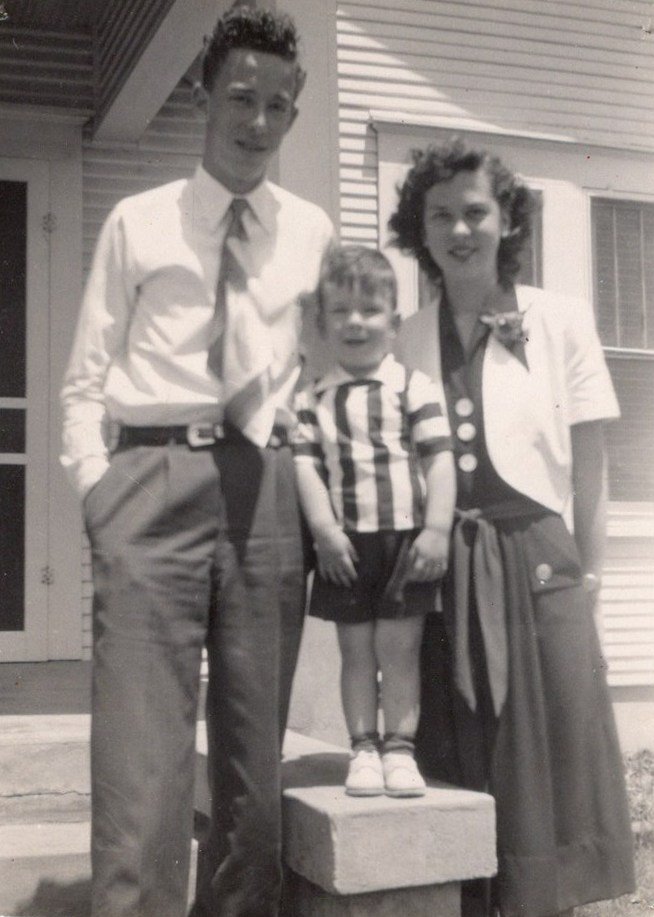
Young Bert
Now let’s shift to Madill, Oklahoma, in the summer of 1949. Bert — my mother’s brother — was a tall, joyful young man, fresh out of high school and ready for college. After a long day working for a local farmer, he too developed a severe headache. By the next day, he was in a hospital in Tulsa. Another body crippled by polio.
Bert leaned on his faith. Romans 8:28 became his anchor: “To me, the verse did not say that polio was good, but that God would bring good things out of it.” Polio wasn’t good. But Bert believed good could come from it.
Photo shows Bert with his sister Dena and younger brother Billy.
Fast forward to 1952 — Okmulgee, Oklahoma. A rehab center where disabled individuals learned employable skills. That’s where Bert first saw Darlene. Red hair. Determined spirit. He was smitten. Their first date came about through a side bet on whether she’d pass her shorthand class. She did. And they never looked back.
They married in July 1953 and moved to Dallas, defying every piece of “traditional wisdom” that said two disabled people shouldn’t marry, have children, or dream big. But they did. And the family they built is why most of my cousins live in Texas today.
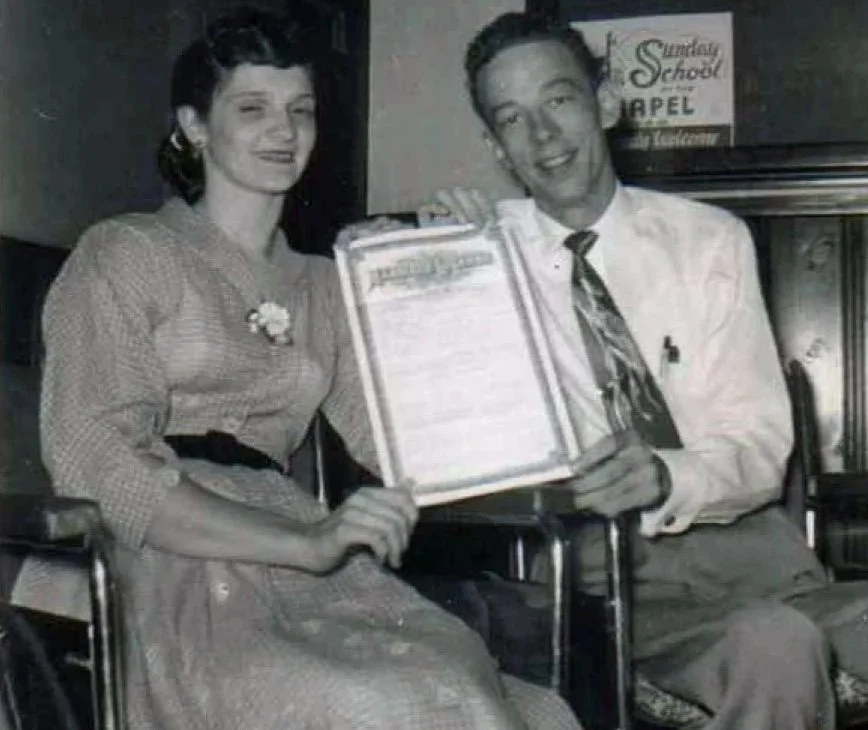
Darlene and Bert proudly display their wedding license.
As a child, I loved visiting them. As an adult, I came to understand just how extraordinary they were. They lived with fierce love and unwavering faith. They didn’t just survive polio — they built a life that radiated joy, purpose, and dignity. Bert would often say Darlene was the best thing to happen to him because of polio.
In the ultimate irony, it was during the COVID shutdown that I finally had the time to write their story. I gathered family memories, read their own accounts, and filled in the blanks through long phone calls. In November 2021, I published Defying Disability: One Couple’s Journey of Fierce Love and Unwavering Faith. It’s a biography, yes — but more than that, it’s a tribute to courage, connection, and the quiet power of choosing love and faith over limitation.
In honor of Polio Awareness Month, I invite you to remember Darlene and Bert. Not just for what they endured, but for what they created. Lives of meaning. A legacy of hope.
This blog comes from a speech I presented for my local Toastmasters group in October 2025. In June 2026, I published the second edition of Defying Disability: One Couple’s Journey of Fierce Love and Unwavering Faith with a new cover and a more streamlined narrative.